
Fontanos
A bit of history...
The Fontanos comparsa was officially founded in 1940. There had been several attempts to create it before, but they were cut short when the Civil War broke out.
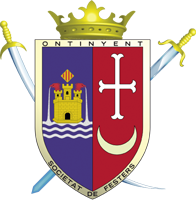
This group represents the first Christian settlers of the city, and because of this they adopted the name of Fontanos, based on the belief that Ontinyent was formerly called Fontinyent. Today it is the only one that displays the shield of the municipality on its costume. The first attire was inspired by the time of the Reconquista. The gala costume consisted of a white robe, with green borders around it, which displayed on the chest the glorious Red Cross that presided over the struggles of the Christians in their crusades against the sons of Mohammed. They wore a blue cape as a representation of water, which is the purest, most beloved and abundant good of these lands. As weapons, they wore a sword and the characteristic club, a combat mace in their hand-to-hand fights against the hosts of the Media Luna. To cover their heads, they wore a round helmet. They wore straps crossed on their chest and brown sandals with blue panties.
The second outfit changed the white tunic for a gray one, soon changing to a blue one with the city's coat of arms, seeking the motifs of the people.
This costume has changed over the years, different types of helmets and weapons have been part of their attire, but the gala dress has always been faithful to the initial colors of the comparsa, white and blue, colors that also identify the patron saint of the city, the Purísima.
The current gala costume consists of a white and blue tunic down to the knees, with the city's coat of arms embroidered on it. On the shoulders they wear a chainmail that also covers the head, and on top of it a metal crown with the shield of the Order of Montesa. This same cross is the protagonist of the white cape they wear on their back. The costume is completed with black leather boots and a belt with a bag of the same material, which combine with metallic details. The current weapon is a sword with motifs of th
The second outfit replaces the white tunic with a blue one, bearing the city's coat of arms on the chest, and includes a plain white cape. It abandons the crown, chainmail, and gauntlets, but retains the boots and the belt with a pouch.
Devotees of the traditions and customs of this town, the Fontanos were bearers of the image of the Purísima in its centenary, a devotion that continued for many years with the visit to our patron saint after the Diana on the Saturday of the festivities, where a Salve was offered to her. They were also the first to participate in the offering accompanied by the most traditional instruments, “dolçaina and tabalet”.
The displays of their captaincies and embassies have always been characterised by the presence of characteristic elements of the city they represent. The result of this is the collaboration of the comparsa in the recovery of the “Ball dels Cavallets” and its subsequent donation to the town in 1999 on the occasion of the celebration of its third embassy.
Furthermore, they boast that they were the first Christian group to dare to wear a unique dress in the entrance; and that they fought for the incorporation of women into the festival as full members, in fact, in their ranks they formed the first squad of women of the Moors and Christians Festival of Ontinyent in 1989.
Today, they are a close-knit group of Festeros, united by their love for the festivities and their comparsa, proudly wearing the colours and shield of Ontinyent.
This group represents the first Christian settlers of the city, and because of this they adopted the name of Fontanos, based on the belief that Ontinyent was formerly called Fontinyent. Today it is the only one that displays the shield of the municipality on its costume. The first attire was inspired by the time of the Reconquista. The gala costume consisted of a white robe, with green borders around it, which displayed on the chest the glorious Red Cross that presided over the struggles of the Christians in their crusades against the sons of Mohammed. They wore a blue cape as a representation of water, which is the purest, most beloved and abundant good of these lands. As weapons, they wore a sword and the characteristic club, a combat mace in their hand-to-hand fights against the hosts of the Media Luna. To cover their heads, they wore a round helmet. They wore straps crossed on their chest and brown sandals with blue panties.
The second outfit changed the white tunic for a gray one, soon changing to a blue one with the city's coat of arms, seeking the motifs of the people.
This costume has changed over the years, different types of helmets and weapons have been part of their attire, but the gala dress has always been faithful to the initial colors of the comparsa, white and blue, colors that also identify the patron saint of the city, the Purísima.
The current gala costume consists of a white and blue tunic down to the knees, with the city's coat of arms embroidered on it. On the shoulders they wear a chainmail that also covers the head, and on top of it a metal crown with the shield of the Order of Montesa. This same cross is the protagonist of the white cape they wear on their back. The costume is completed with black leather boots and a belt with a bag of the same material, which combine with metallic details. The current weapon is a sword with motifs of th
The second outfit replaces the white tunic with a blue one, bearing the city's coat of arms on the chest, and includes a plain white cape. It abandons the crown, chainmail, and gauntlets, but retains the boots and the belt with a pouch.
Devotees of the traditions and customs of this town, the Fontanos were bearers of the image of the Purísima in its centenary, a devotion that continued for many years with the visit to our patron saint after the Diana on the Saturday of the festivities, where a Salve was offered to her. They were also the first to participate in the offering accompanied by the most traditional instruments, “dolçaina and tabalet”.
The displays of their captaincies and embassies have always been characterised by the presence of characteristic elements of the city they represent. The result of this is the collaboration of the comparsa in the recovery of the “Ball dels Cavallets” and its subsequent donation to the town in 1999 on the occasion of the celebration of its third embassy.
Furthermore, they boast that they were the first Christian group to dare to wear a unique dress in the entrance; and that they fought for the incorporation of women into the festival as full members, in fact, in their ranks they formed the first squad of women of the Moors and Christians Festival of Ontinyent in 1989.
Today, they are a close-knit group of Festeros, united by their love for the festivities and their comparsa, proudly wearing the colours and shield of Ontinyent.
Founded in 1940
Christian faction
Current promotion roles
Members holding roles in this troupe during the current promotion

MªJOSE GARRIDO ORTIZ
First Tro
VICTOR GONZALEZ CHAVEZ
Porta Guion